



ORGANS OF PARIS © 2026 Vincent Hildebrandt HOME ALL ORGANS
Institut National des
jeunes aveugles (INJA)
56, boulevard des Invalides, 75007 Paris
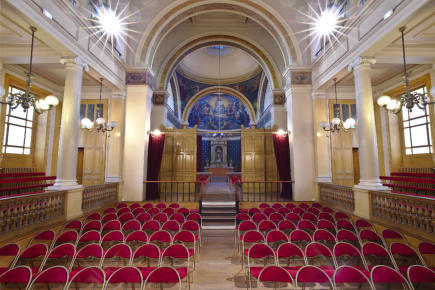
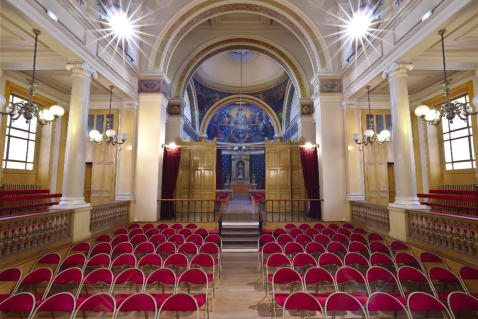
Salle Marchal
Salle Duroc >
Salle Langlais >



The National Institute for young blinds (INJA) was
founded in 1784 by Valentin Haüy. A famous pupil
(and later teacher) was Louis Braille, the inventor of
the braille system. From its start, the teaching of
music has been an important part of the educational
program of this institute The first organ class started
in 1826 and by 1833 no less than 14 blind students
held organist positions in the churches of Paris. The
institute continued to produce large number of
successful organists such as Louis Vierne, André
Marchal, Jean Langlais and Gaston Litaize.
The present building dates from 1844.
Further details (in French)…

D4
1883
It is an organ originally built by Cavaillé-Coll in 1883. It
featured 34 stops spread over three 56-note manuals and a
30-note pedalboard. The stops of the Grand-Orgue keyboard
were located in the right side of the case. The stops of the
Positif and Récit keyboards were placed on the left side of
the case. As for the pedal stops, they were placed at the back
of the cases, divided in half. At least two of the three manual
keyboards were expressive.
1910
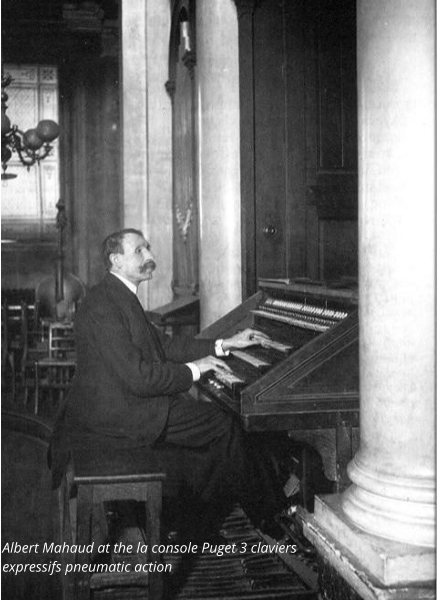
The instrument underwent a first transformation in 1910 by
Jean-Baptiste Puget: removal of the Barker machine and
replacement of the mechanical transmission with a tubular
pneumatic transmission. In addition, dismantling and
renovation of the windchests of Positif and Récit (split). The
instrumental part was enclosed in two expressive boxes: one
for the Great Organ and the Pedal, the other for the Positive
and the Recital.
1926
Overhaul by Auguste Convers.
1949
A few small changes in the stoplist, orienting it towards a
more neo-classical aesthetic by Beuchet-Debierre.
1959-1961
Gonzalez carried out a series of works aimed at transforming
the aesthetics of the organ according to the neo-classical
aesthetic with re-using many elements of the old organ:
additions of mutations to the positive (nazard, tierce and
cymbal), deletion of romantic stops in the Récit. The slightly
completed Great Organ remains in the right-hand case. The
Swell is greatly increased but remains in the left sideboard.
On the other hand, a new sound plan of Positif was created
on the gallery of the 1st floor, above the Cavaillé-Coll buffets.
Also on the 1st floor, installation of new pedal stops.
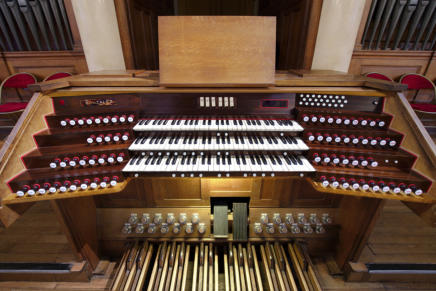
Creation of a new mobile console. The stoplist was then
increased to 68 stops spread over 3 manuals.
1982/1997
Overhauls by Gonzalez and Dargassies
Composition
Source:
Dominique Levacque Considerations upon the history of the
organs of INJA (in French)
The Organ School of France and the Blind


1885 - Cavaillé-Coll (1)
1910 - Puget (3a)
1926 - Convers (6)
1949 - Beuchet (3a)
1961- Gonzalez (3b)
1982 - Gonzalez (6)
1997 - Dargassies (6)
III/70 (64) - electrical traction
stoplist


Titular organist
Dominique Levacque
Famous organists in the past: Louis Vierne, André
Marchal, Gaston Litaize, Jean Langlais
Site de l’institut
Videos
Dominique Levacque
Photos
Johan Vexo (facebook)








Organs of Paris


Institut National des
jeunes aveugles (INJA)
56, boulevard des Invalides, 75007 Paris
Salle Marchal
Salle Duroc >
Salle Langlais >

ORGANS OF PARIS © 2026 Vincent Hildebrandt
D4
1883
It is an organ originally built by Cavaillé-Coll in 1883. It
featured 34 stops spread over three 56-note manuals and a
30-note pedalboard. The stops of the Grand-Orgue keyboard
were located in the right side of the case. The stops of the
Positif and Récit keyboards were placed on the left side of the
case. As for the pedal stops, they were placed at the back of
the cases, divided in half. At least two of the three manual
keyboards were expressive.
1910
The instrument underwent a first transformation in 1910 by
Jean-Baptiste Puget: removal of the Barker machine and
replacement of the mechanical transmission with a tubular
pneumatic transmission. In addition, dismantling and
renovation of the windchests of Positif and Récit (split). The
instrumental part was enclosed in two expressive boxes: one
for the Great Organ and the Pedal, the other for the Positive
and the Recital.
1926
Overhaul by Auguste Convers.
1949
A few small changes in the stoplist, orienting it towards a
more neo-classical aesthetic by Beuchet-Debierre.
1959-1961
Gonzalez carried out a series of works aimed at transforming
the aesthetics of the organ according to the neo-classical
aesthetic with re-using many elements of the old organ:
additions of mutations to the positive (nazard, tierce and
cymbal), deletion of romantic stops in the Récit. The slightly
completed Great Organ remains in the right-hand case. The
Swell is greatly increased but remains in the left sideboard.
On the other hand, a new sound plan of Positif was created
on the gallery of the 1st floor, above the Cavaillé-Coll buffets.
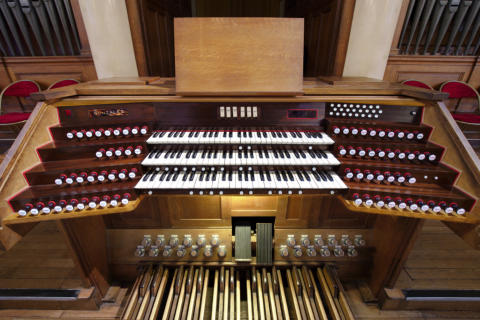
Also on the 1st floor, installation of new pedal stops. Creation
of a new mobile console. The stoplist was then increased to
68 stops spread over 3 manuals.
1982/1997
Overhauls by Gonzalez and Dargassies
Composition
Source:
Dominique Levacque Considerations upon the history of the
organs of INJA (in French)
The Organ School of France and the Blind
1885 - Cavaillé-Coll (1)
1910 - Puget (3a)
1926 - Convers (6)
1949 - Beuchet (3a)
1961- Gonzalez (3b)
1982 - Gonzalez (6)
1997 - Dargassies (6)
III/70 (64) - electrical traction
stoplist
Titular organist
Dominique Levacque
Famous organists in the past: Louis Vierne, André Marchal,
Gaston Litaize, Jean Langlais
Site de l’institut
Videos
Dominique Levacque
Photos
Johan Vexo (facebook)
