ORGANS OF PARIS © 2026 Vincent Hildebrandt HOME ALL ORGANS
Eglise Américaine
65, quai d'Orsay, 75007 Paris


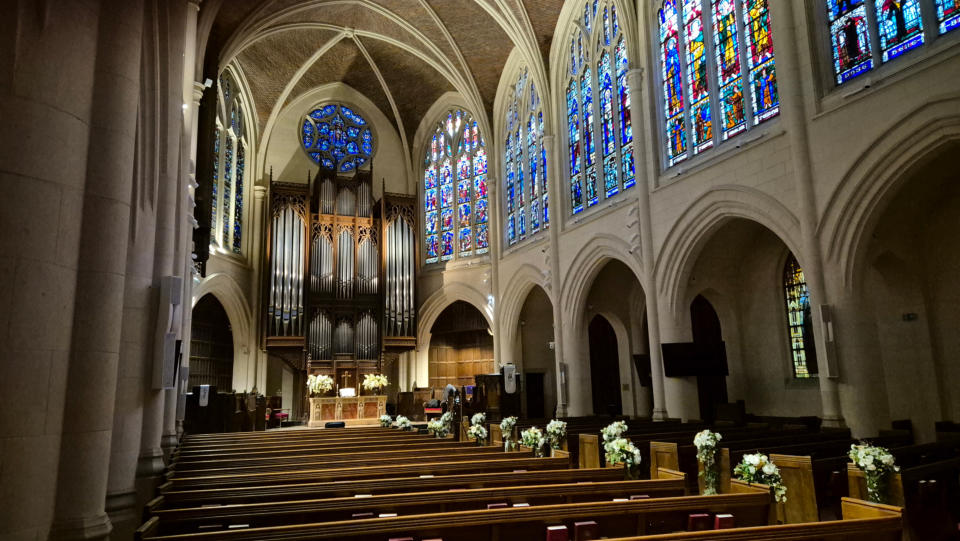
The American Church in Paris is the first
American church established on foreign soil.
Begun in 1814, it was officially chartered and the
first sanctuary built in 1857. In 1925, the church
acquired the land of the Quai d'Orsay and
entrusted the architect Carrol Greenough with
the construction of a new neo-Gothic building.
Construction of the building was completed on
March 6, 1931, although a groundbreaking
(laying of the first stone) took place on March 1,er
1926. The church has an iconography of great
richness. The north stained glass windows and
those of the narthex all have the same
dimensions. Some stained glass motifs pay
tribute to American soldiers who died during the
First World War.


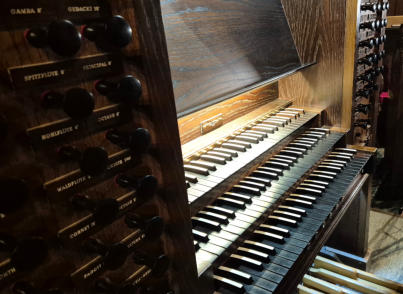
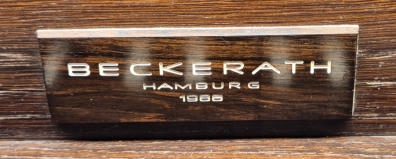
1988 - Von Beckerath
III/47 -
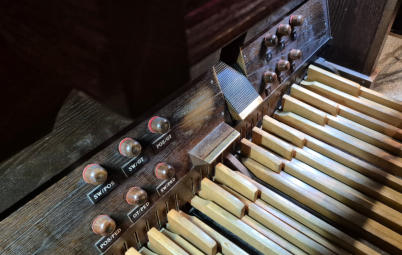
mechanical traction (keyboards) -
electrical traction (stops)
stoplist

D1
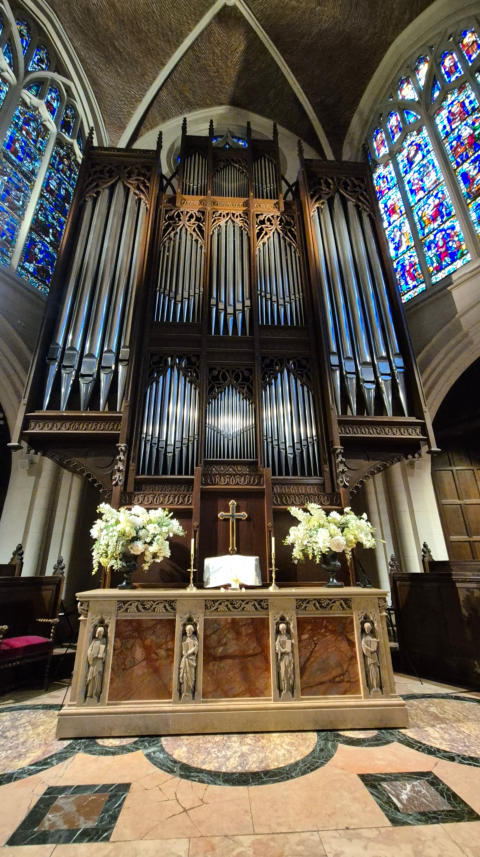
The Beckerath organ
In 1988, the instrument was replaced by a new organ in
Germanic style by the Von Beckerath House of
Hamburg.
Learning from past experiences, it was decided that the
new instrument would be located against the front wall
in the rear of the chancel. Gerhard Scharenberg
designed the instrument based on the « Werkprinzip »
where each division has its own organ case and
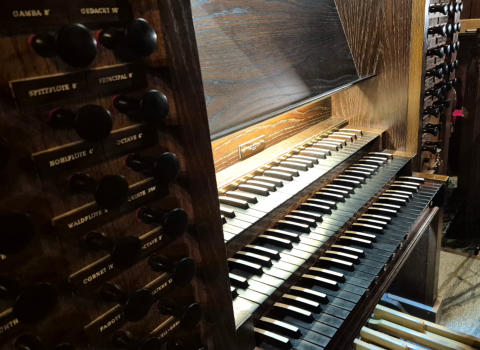
inserted into a single large Gothic organ case. The Swell
division (3rd manual) is located immediately above the
manuals and its pipework is located inside an
expression box except for the 8' Violprincipal that is
located in the façade hiding the shutters. The Great
division (2nd manual) is located in the middle of the
organ case with the small pipes from the 8' Principal in
the façade. On top of the organ case, the Positif (1st
manual), with the 4' Principal pipework in the façade.
The Pedal division is divided into two cases, on each
side of the main organ case, with the 16' Principal in the
façade.
Work in the workshop began in July 1987 and last nine
months. The instrument, Beckerath's opus 208, arrived
in Paris on April 7, 1988 to be erected under Klaus
Schmekal's supervision. Six large bellows, made of
Oregon pine, hold the 3328 hand-made pipes of which
116 are made of wood (bass notes of 16' Gedackt, 16'
Bordun and 8' Rohrflöte; 8' Violprincipal and 8' Gedackt
stops). Metal pipes are made of tin-lead alloy at 78% of
Zn for the Montres, 56% for the Principals, 46% for reed
resonators, and 36% for the flues. Hans Ulrich Erbslöh's
pre-voicing was finished by Rolf Miehl and Timm
Sckopp. Gunther Hamann designed the organ case.
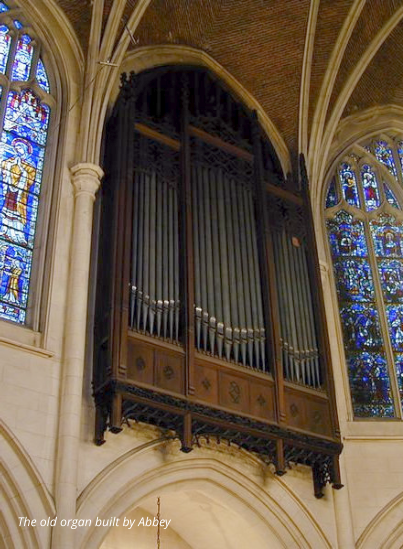
The former organ of Abbey
Until 1988, the church had an electric action
instrument, built by Abbey in 1931, with 48 stops
spread over 3 manuals of 61 notes and a pedalboard of
32 notes. This organ was placed in several places in the
church. The GO and the Récit were placed in a flat case
located on a side gallery near the choir. The Positif and
the Pedal were placed on the floor, behind the left arch
of the choir. The division of Echo (playable on the 3rd
keyboard) was located in an antiphonal on a small
tribune at the back of the nave. Finally, the independent
console was placed in the chancel, on the right.
Unfortunately, the organ building firm went bankrupt
before the organ project was over. Hastily, the instrument
was completed and installed but the instrument had
design problems. The pipework was housed in an adjacent
room that opened onto the chancel. This location,
considered appropriate by the organ builder, proved to be
harmful for the sound of the instrument. In fact, it was
difficult for the sound to reach the church is spite of high
wind pressure that fade the beauty and brightness of tone.
n addition, the console was located on the opposite side of
the church. The electro-pneumatic action proved to be
extremely delicate, adding a delay in sound emission and
causing many breakdowns and costly repairs.
The console was replaced by Casavant and a
restoration was carried out in 1968 by Jean Jonet.
Around 1987 the pipework was sold to help finance the
Beckerath. The keyboards are at Notre-Dame du
Perpétuel Secours. The case of the old Abbey organ is
still in place on the side gallery, above the choir.
Source
Titular organist
Samuel Gaskin
Website of the church
Videos
Samuel Gaskin
Didier Matry
Photos
Vincent Hildebrandt









Organs of Paris


Eglise Américaine
65, quai d'Orsay, 75007 Paris
ORGANS OF PARIS © 2026 Vincent Hildebrandt
1988 - Von Beckerath
III/47 -
mechanical traction (keyboards) -
electrical traction (stops)
stoplist
D1
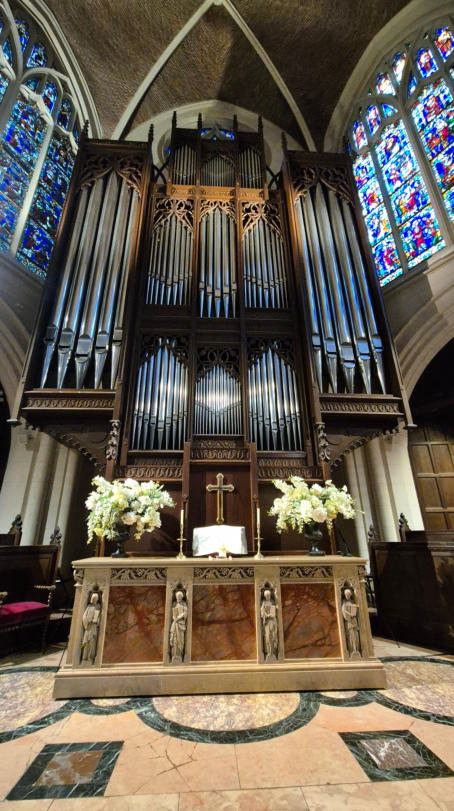
The Beckerath organ
In 1988, the instrument was replaced by a new organ in
Germanic style by the Von Beckerath House of Hamburg.
Learning from past experiences, it was decided that the new
instrument would be located against the front wall in the rear
of the chancel. Gerhard Scharenberg designed the instrument
based on the « Werkprinzip » where each division has its own
organ case and inserted into a single large Gothic organ case.
The Swell division (3rd manual) is located immediately above
the manuals and its pipework is located inside an expression
box except for the 8' Violprincipal that is located in the façade
hiding the shutters. The Great division (2nd manual) is located
in the middle of the organ case with the small pipes from the
8' Principal in the façade. On top of the organ case, the Positif
(1st manual), with the 4' Principal pipework in the façade. The
Pedal division is divided into two cases, on each side of the
main organ case, with the 16' Principal in the façade.
Work in the workshop began in July 1987 and last nine
months. The instrument, Beckerath's opus 208, arrived in
Paris on April 7, 1988 to be erected under Klaus Schmekal's
supervision. Six large bellows, made of Oregon pine, hold the
3328 hand-made pipes of which 116 are made of wood (bass
notes of 16' Gedackt, 16' Bordun and 8' Rohrflöte; 8'
Violprincipal and 8' Gedackt stops). Metal pipes are made of
tin-lead alloy at 78% of Zn for the Montres, 56% for the
Principals, 46% for reed resonators, and 36% for the flues.
Hans Ulrich Erbslöh's pre-voicing was finished by Rolf Miehl
and Timm Sckopp. Gunther Hamann designed the organ case.
The former organ of Abbey
Until 1988, the church had an electric action instrument, built
by Abbey in 1931, with 48 stops spread over 3 manuals of 61
notes and a pedalboard of 32 notes. This organ was placed in
several places in the church. The GO and the Récit were
placed in a flat case located on a side gallery near the choir.
The Positif and the Pedal were placed on the floor, behind the
left arch of the choir. The division of Echo (playable on the 3rd
keyboard) was located in an antiphonal on a small tribune at
the back of the nave. Finally, the independent console was
placed in the chancel, on the right.
Unfortunately, the organ building firm went bankrupt before the
organ project was over. Hastily, the instrument was completed
and installed but the instrument had design problems. The
pipework was housed in an adjacent room that opened onto the
chancel. This location, considered appropriate by the organ
builder, proved to be harmful for the sound of the instrument. In
fact, it was difficult for the sound to reach the church is spite of
high wind pressure that fade the beauty and brightness of tone.
n addition, the console was located on the opposite side of the
church. The electro-pneumatic action proved to be extremely
delicate, adding a delay in sound emission and causing many
breakdowns and costly repairs.
The console was replaced by Casavant and a restoration was
carried out in 1968 by Jean Jonet.
Around 1987 the pipework was sold to help finance the
Beckerath. The keyboards are at Notre-Dame du Perpétuel
Secours. The case of the old Abbey organ is still in place on
the side gallery, above the choir.
Source
Titular organist
Samuel Gaskin
Website of the church
Videos
Samuel Gaskin
Didier Matry
Photos
Vincent Hildebrandt